1. The Middle Ages
The Middle Ages, also called the Dark Ages, lasted for a thousand years. For most people, life was not much than hard work, poverty, fear of God and God's punishment. The 14th century with its wars, starvation, and plague was no different.
2. New Ideas
But in the middle of the 15th century things started to change. One of the big changes was in the way people thought about things. They began to think differently about life. They studied the writings and works of the Greeks and the Romans and realized that earlier civilizations had lived differently. They wanted to be educated and to enjoy life. They believed that things like art, music, and science could make life better for everyone.
'Renaissance' is a French word meaning 'rebirth'. The period is called that way because people started taking an interest in ancient times, in particular Ancient Greece and Rome. The Renaissance began around 1400 in Italy but soon spread across the whole of Europe.
3. Reading and printing
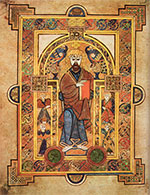
In the Middle Ages, there were very few books. The books that existed nearly all belonged to churches, universities, or to noblemen. They were written by hand and often had beautiful hand-painted pictures. They were so expensive that most people could not afford them. Most books at that time were written in Latin, the language that only priests and well-educated people understood.
Now, around 1450, Gutenberg invented the printing press. They started to print everything that they thought was interesting: ancient writings, poetry, plays, lives of the saints, mathematics textbooks, Christian stories, erotic stories, and books about animals and monsters. Suddenly, all this wonderful knowledge was available to all the people who could read.
4. Art and science
Before the Renaissance, Church was the one who was the most active in art and science. Medieval scientists mostly studied the Bible and how they could save their souls and come to heaven. Now the scientist's focus changed; they studied people and the world around them. This was the time of great development in maths, astronomy, medicine, and natural science.
Rich families became patrons of great art. Paintings became more realistic. Artists showed nature and the feelings of people. They were less focused on religious topics.
Art and science were very closely related. Leonardo da Vinci, for example, studied anatomy to understand the human body better so he could create better paintings and sculptures.
Near the end of the Renaissance, the scientific revolution began. Scientists like Francis Bacon, Galileo Galilei, and Isaac Newton made discoveries that changed the world.
5. Italy, the cradle of Renaissance
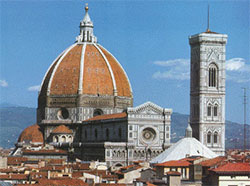
A great cultural development started in Italy. Genoa, Florence, Milan, Venice, Naples, and Rome were rich and powerful city-states. These states competed in who had the best art and buildings. Rich families supported artists, scientists, and philosophers and their new ideas and art. Renaissance first began in Florence ruled by the powerful Medici Family who supported artists such as Leonardo da Vinci and Michelangelo.
6. Renaissance, the turning point in history
The Renaissance was the turning point in the development of humanity. It brought about changes in everything; not just in art, literature, and science but also in how people viewed themselves and the world.